EPDM Roof: Guide for Commercial Properties

If you are considering an EPDM roof for your building, understanding how it works and why it is widely used in commercial construction can help you make an informed decision. EPDM, which stands for ethylene propylene diene monomer, is a synthetic rubber roofing membrane designed for flat and low slope roofs. For property owners in Hammond and surrounding areas, EPDM roofing offers durability, flexibility, and cost effective performance in a climate that experiences both hot summers and freezing winters.
In this guide, you will learn:
- What an EPDM roof is and how it is constructed
- Key benefits for commercial properties
- Installation methods and maintenance needs
- 2026 cost expectations
Let’s explore why EPDM continues to be a popular solution for commercial roofing systems.
What Is an EPDM Roof?

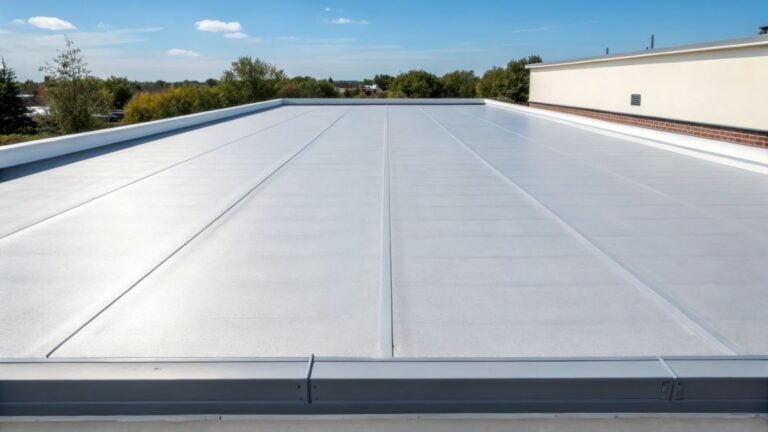
An EPDM roof is a single ply membrane roofing system made from synthetic rubber. It is typically installed in large sheets that are either mechanically fastened, fully adhered, or ballasted to the roof deck. Because it is flexible and resistant to extreme temperatures, EPDM performs well in a wide range of climates.
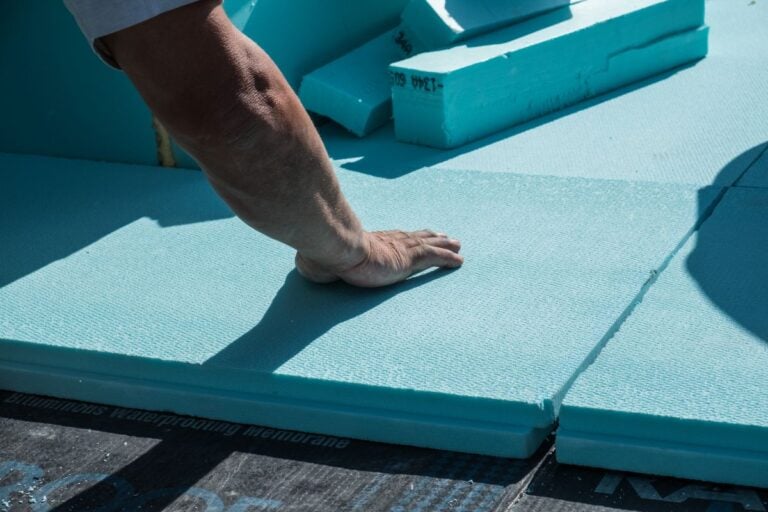
Commercial buildings often have flat or low slope roof designs, which require specialized waterproofing systems. EPDM membranes create a continuous barrier that protects the roof deck and insulation from moisture infiltration.
- Single ply membrane: Installed in large sheets to minimize seams
- Rubber composition: Flexible and resistant to cracking
- Designed for low slope roofs: Ideal for warehouses, offices, and retail buildings
Its simple design and long track record make EPDM a reliable choice for commercial property owners.
How EPDM Roofing Systems Are Installed
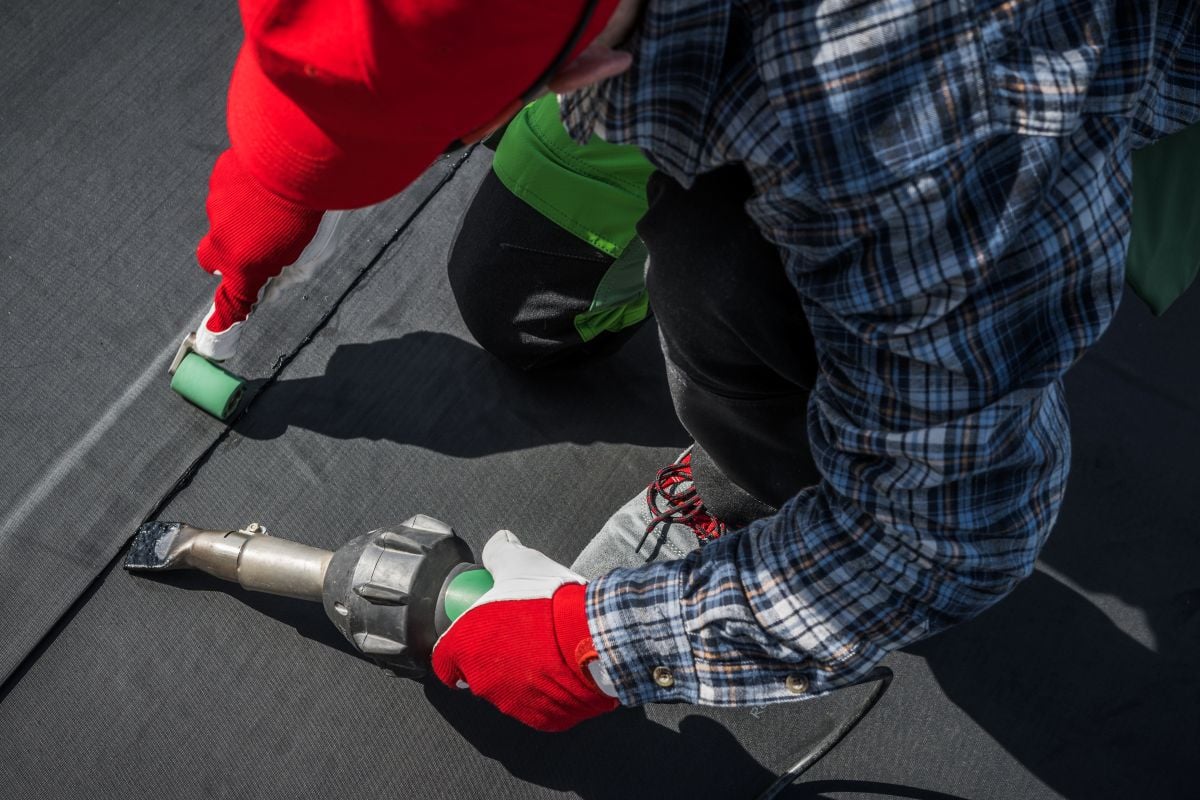
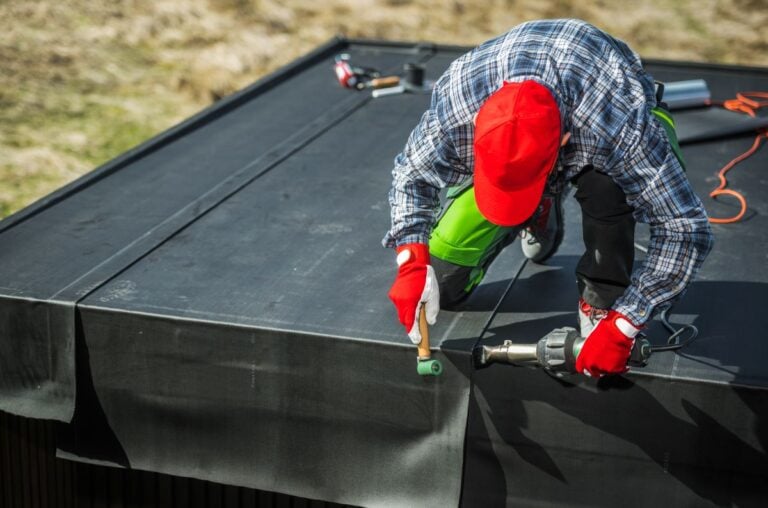
EPDM membranes can be installed using different attachment methods depending on the building’s structure and wind exposure requirements. The installation method affects performance, maintenance, and cost.
Mechanically Fastened EPDM
In a mechanically fastened system, the membrane is secured to the roof deck using specialized fasteners and plates. Seams are then sealed with adhesive or tape.
- Secure attachment: Fasteners anchor membrane to deck
- Cost efficient method: Often lower labor costs than full adhesion
- Suitable for large roofs: Common in industrial buildings
This method balances durability and affordability for many commercial properties.
Fully Adhered EPDM
A fully adhered system uses bonding adhesive to attach the membrane directly to the insulation or substrate. This creates a smooth appearance and strong wind resistance.
- Enhanced wind performance: Reduced risk of membrane movement
- Smooth finish: Improved aesthetic for visible roof edges
- Strong bond: Even load distribution across surface
Fully adhered systems are often chosen in Hammond where strong winds can impact exposed roofs.
Ballasted EPDM
Ballasted systems rely on heavy materials such as river rock or concrete pavers to hold the membrane in place. The membrane is loosely laid and weighed down by the ballast.
- Quick installation: Minimal adhesive or fasteners required
- Lower material cost: Reduced attachment hardware
- Added protection: Ballast shields membrane from UV exposure
Ballasted systems require structural support capable of handling additional weight.
6 Benefits of an EPDM Roof for Commercial Properties

Commercial property owners choose EPDM for several practical reasons. Below are six major advantages that make it a preferred roofing option.
1. Long Service Life
EPDM roofs typically last 20 to 30 years with proper installation and maintenance. Some systems exceed this range when regularly inspected and repaired.
- Proven durability: Decades of performance history
- Weather resistance: Withstands rain, snow, and UV exposure
- Low degradation rate: Maintains flexibility over time
Its long lifespan makes it a dependable investment.
2. Excellent Flexibility in Temperature Extremes
EPDM remains flexible even in freezing temperatures. This flexibility helps prevent cracking and splitting during winter months in Hammond and surrounding areas.
- Cold weather performance: Resists brittleness
- Thermal expansion tolerance: Adapts to seasonal temperature changes
- Reduced stress on seams: Flexible material reduces strain
This adaptability is especially valuable in regions with fluctuating weather patterns.
3. Cost Effective Installation
Compared to other commercial membranes like PVC or TPO, EPDM is often more affordable upfront. Material costs and installation labor are typically lower.
- Lower material price point: Competitive cost per square foot
- Simple installation process: Streamlined labor requirements
- Strong return on investment: Durable performance at moderate cost
Budget conscious property owners often favor EPDM for this reason.
4. Ease of Repair
One advantage of EPDM roofing is its relatively simple repair process. Small punctures or seam separations can often be patched quickly using compatible materials.
- Patch friendly surface: Repairs bond effectively to existing membrane
- Minimal disruption: Targeted repairs reduce downtime
- Lower repair costs: Smaller issues addressed quickly
Routine inspections help identify small problems before they expand.
5. UV and Ozone Resistance
EPDM membranes are engineered to resist ultraviolet radiation and ozone exposure. This resistance reduces premature aging.
- UV stability: Protects against sun damage
- Ozone resistance: Maintains integrity in polluted environments
- Consistent performance: Slower breakdown over time
UV resistance is important for buildings with constant sun exposure.
6. Environmentally Friendly Option
EPDM is recyclable at the end of its service life and contributes to sustainable building practices.
- Recyclable materials: Reduced landfill impact
- Energy efficiency compatibility: Works with insulated roof systems
- Long lifespan: Fewer replacements over time
Sustainability considerations are increasingly important for commercial property owners.
EPDM Roof Cost in 2026
Costs vary based on roof size, insulation requirements, and attachment method. In 2026, commercial EPDM roof installation in Hammond and surrounding areas typically ranges between $5.50 and $10.00 per square foot installed.
| Project Type | Estimated Cost Range |
| Small commercial roof | $12,000 to $25,000 |
| Medium warehouse | $25,000 to $75,000 |
| Large industrial facility | $75,000 and above |
Several factors influence final pricing.
- Insulation thickness: Higher R values increase cost
- Roof accessibility: Multi story buildings add labor complexity
- Tear off requirements: Removing old materials increases expense
- Attachment method: Fully adhered systems may cost more than ballasted
An on site evaluation provides accurate cost projections.
Maintenance Tips for EPDM Roofs

Routine maintenance helps extend the lifespan of your EPDM roof. Commercial property owners should schedule inspections at least once per year and after major storms.
- Inspect seams regularly: Check for separation or lifting
- Remove debris: Prevent punctures and drainage blockages
- Check rooftop equipment areas: Monitor flashing around HVAC units
- Address ponding water: Ensure proper drainage slope
Proactive maintenance reduces the likelihood of emergency repairs.
Invest in Reliable Commercial Roofing Protection
An EPDM roof offers commercial property owners a balance of durability, flexibility, and affordability. With proper installation and routine maintenance, it can provide decades of reliable protection.
If you are considering an EPDM roofing system, contact Discount Roof today for a free commercial estimate in Hammond and surrounding areas. Our team will evaluate your building, explain your options, and deliver a roofing solution designed for long term performance.
Recent Articles
The Roof Learning Center
Get Your Free Estimate Today