What Does Hail Damage Look Like on a Roof? (With Photos)

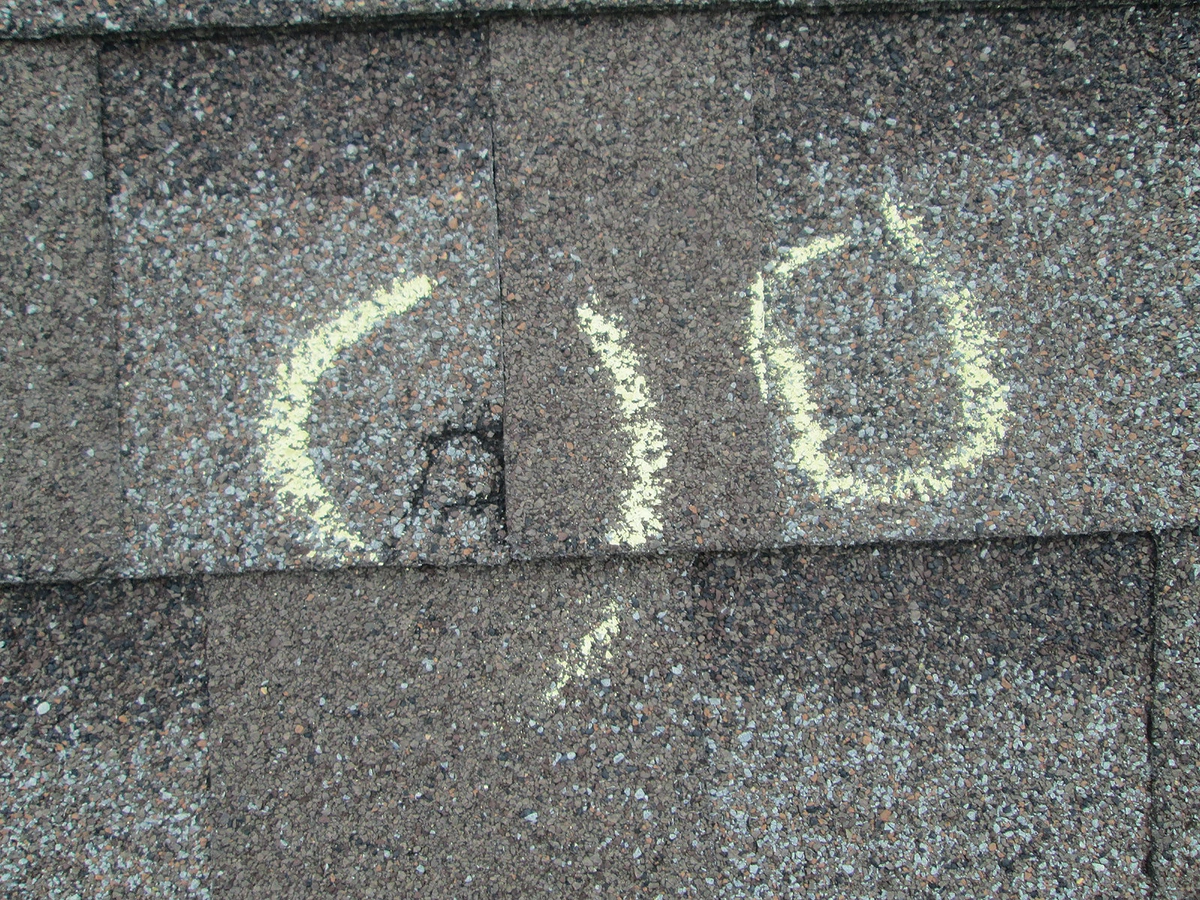
Hail damage on a roof looks like random, scattered dark spots or dimples where the protective granules have been knocked off the shingle, exposing the black asphalt mat underneath. The hits follow no pattern, the bruised spots often feel soft when pressed, and on metal surfaces like gutters and vents hail leaves round dents. That randomness is the key, because it is how roofers and insurance adjusters tell real hail damage apart from normal aging or foot traffic.
Hail is a regular visitor here. Local records show roughly 50 hail reports within 10 miles of Valparaiso since 2004, with stones as large as 1.75 inches, and the most recent damaging hail fell in March 2026 at about quarter size. The tricky part is that most hail damage is invisible from the ground, so plenty of Porter County roofs are quietly losing granules right now. Here is what to look for, surface by surface.
What Does Hail Damage Look Like on Asphalt Shingles?
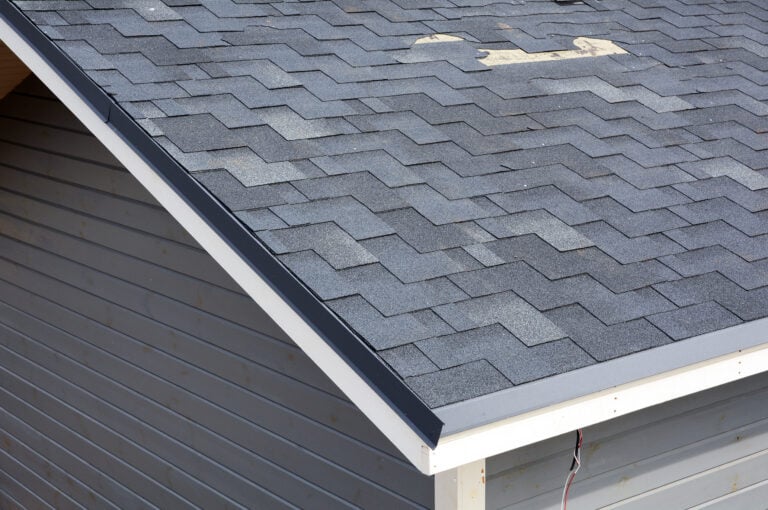
On asphalt shingles, hail damage shows up as round, dark spots where granules have been knocked away, often with a soft or bruised feel. Look for:
- Random dark dimples with no repeating pattern across the slope
- Granule loss that exposes the black asphalt mat underneath
- A soft, springy spot when you press the bruise, similar to a bruise on fruit
- Cracks or fractures in the shingle mat radiating from an impact point
Because the pattern is random, hail damage looks different from the straight, uniform wear you get from age or the scuffed lines left by foot traffic.
What Does Hail Damage Look Like on a Metal Roof or Surface?
On metal, hail leaves round dents. Even when shingles hide the damage, the soft metal around your roof tells the story:
- Dents in gutters, downspouts, and drip edge
- Dimpled or dented metal vents, valleys, and flashing
- Dings on the metal roof panels themselves, especially on lower-slope sections
Metal damage is often the easiest hail evidence to spot from the ground, and it is one of the first things an adjuster checks, so note any dented metal before you call.
What About Gutters, Vents, and Flashing?
These soft-metal components are your early warning system:
- Gutters and downspouts: round dents and chipped paint
- Roof vents and turtle vents: dented housings or cracked plastic caps
- Flashing around chimneys and valleys: dimpling or displacement
If these show hits, the shingles almost certainly took damage too, even if it is harder to see.
Hail Damage vs Normal Wear: How to Tell the Difference
This is where most homeowners get it wrong, and where claims get denied. Here is the quick comparison:
| Hail damage | Normal wear / aging | |
|---|---|---|
| Pattern | Random, scattered, no repetition | Even, uniform across the roof |
| Shape | Round dimples and bruises | Curling, cracking, bald patches |
| Feel | Soft spot under the granule loss | Brittle, hard, dried out |
| Metal nearby | Dented gutters and vents | No fresh dents |
| Timing | Appears after a dated storm | Develops slowly over years |
Insurance covers sudden hail damage from a dated storm. It does not cover slow wear, which is exactly why the random pattern and matching dented metal matter so much.
What Granule Loss Looks Like Up Close: A Valparaiso Roof, Before and After
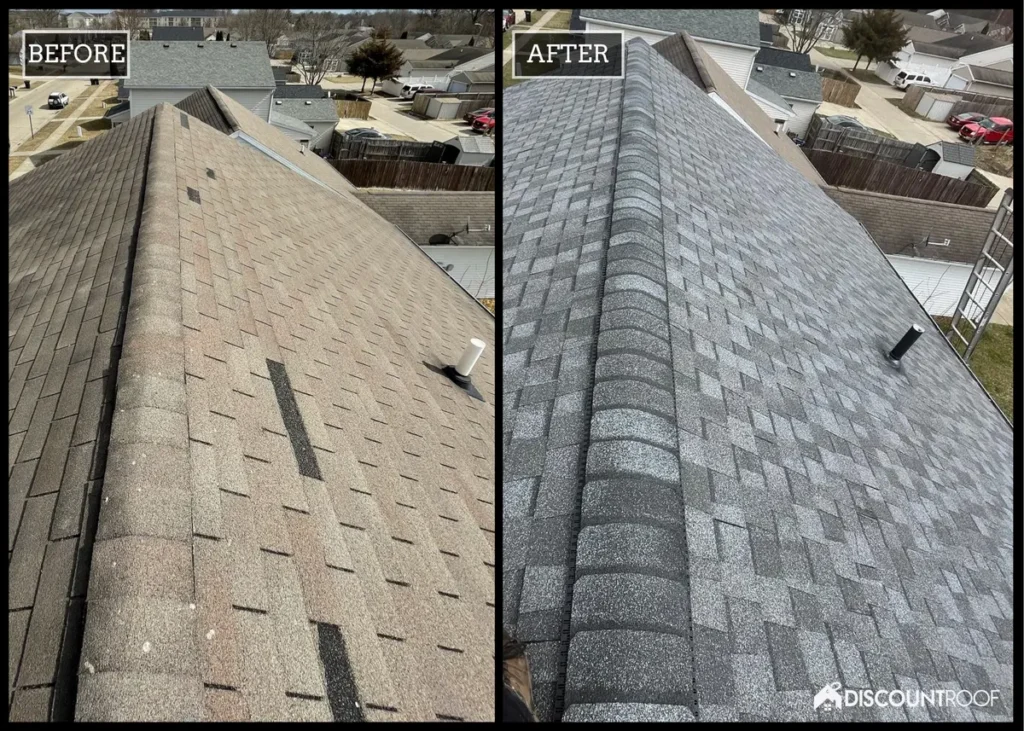
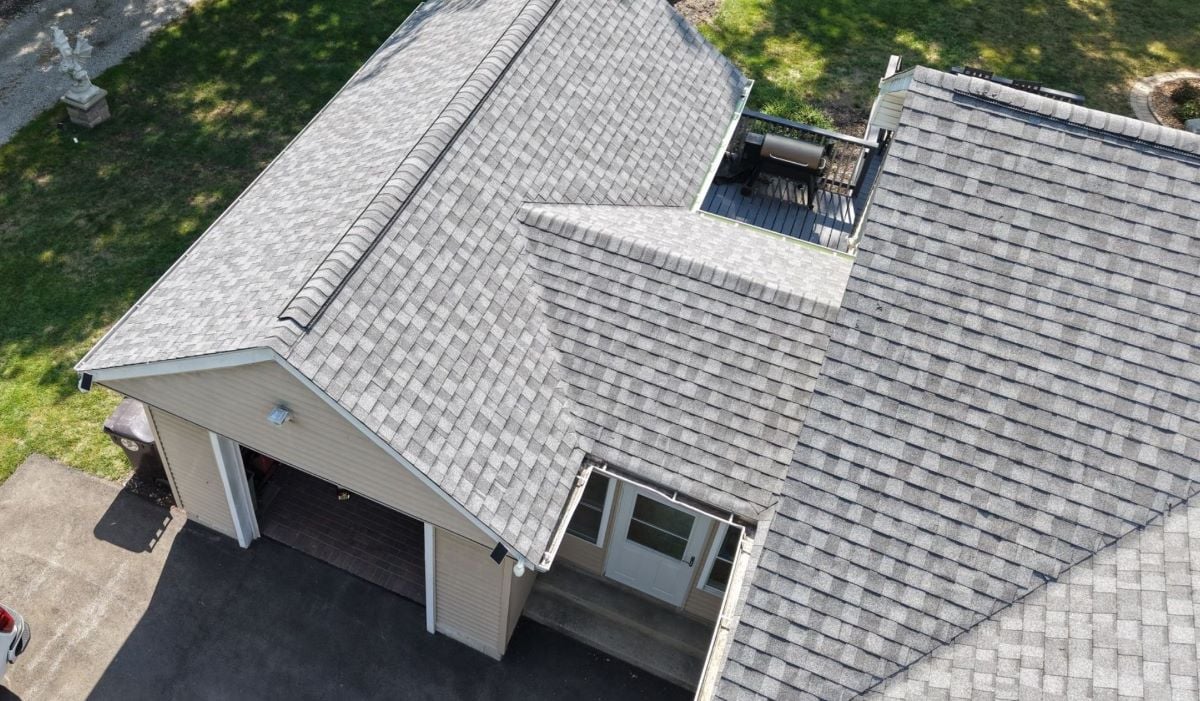
Hail strips the granules off your shingles, and once enough surface is gone the damage spreads across the whole roof. This Valparaiso home is a clear example. By the time we saw it, the shingles had lost granules in broad, blotchy patches, exposing the asphalt mat underneath, and an earlier patch job (the mismatched section) had stopped matching years ago. At that point a repair will not hold, so we replaced it.
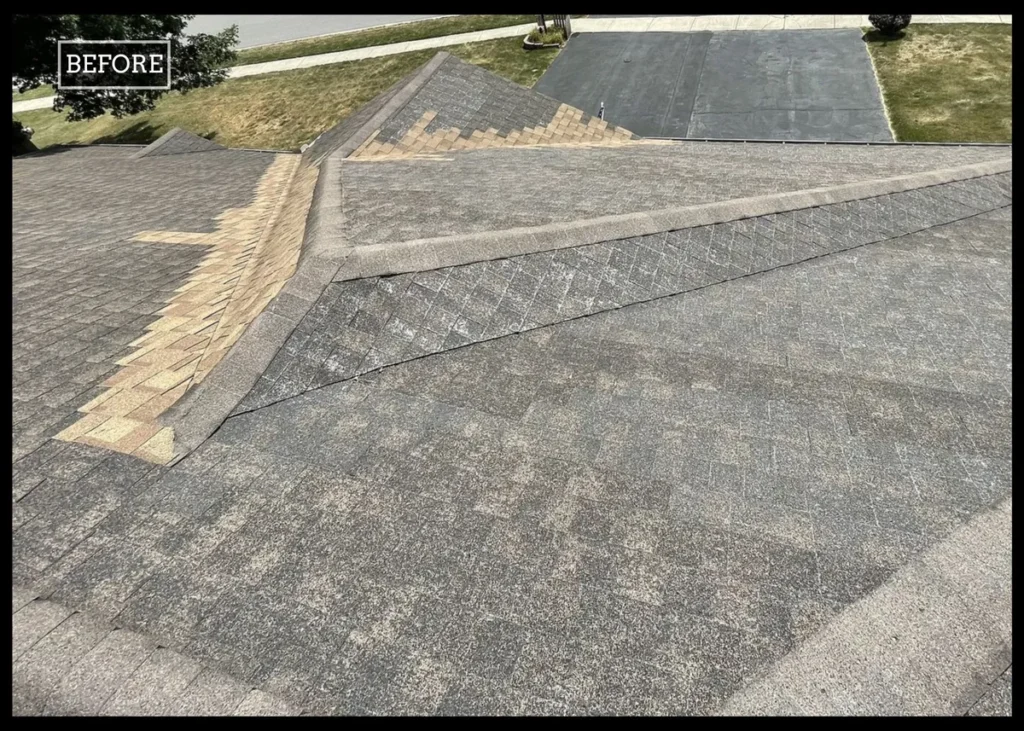
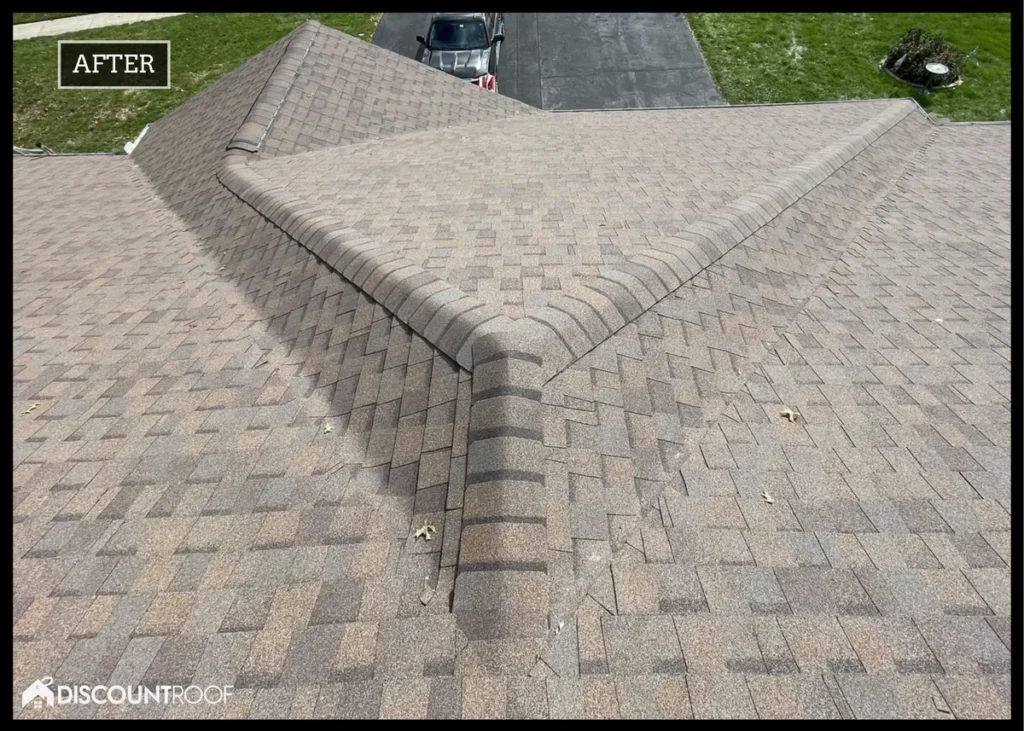
The lesson for hail: those same pale, granule-stripped spots start small and scattered after a storm. Caught early, they are a cheap repair or a covered claim. Left alone, they spread into what you see above.
What Size Hail Causes Roof Damage?
Hail roughly 1 inch in diameter, about the size of a quarter, is generally enough to damage asphalt shingles. Smaller hail driven by strong winds can still strip granules. For reference, the quarter-size hail that hit the Valparaiso area in March 2026 sits right at that damaging threshold, and the region has seen stones up to golf-ball size. So even a storm that did not seem severe is worth a look.
How to Check Your Roof for Hail Damage Safely
You can do a first pass without climbing up:
- Walk the perimeter and check gutters, downspouts, and any metal for fresh dents.
- Look at window sills, screens, siding, and your AC unit for dents, since matching damage there supports a roof claim.
- Check for granules washed into gutter outlets or at the base of downspouts.
- Photograph everything with the storm date noted.
- Check your attic after the next heavy rain for water stains, damp insulation, or daylight through the deck, which means damage already broke through.
Do not get on a wet or steep roof. The close-up shingle inspection is best left to a professional, who can safely confirm and document the bruising. If you find any of the signs above, the next question is whether you are looking at a repair or a full replacement, and what it costs.
What Happens if You Ignore Hail Damage?
Those exposed spots do not heal. Once the granules are gone, UV rays and the freeze-thaw cycle break down the asphalt faster, and the bruises become leaks over the following months. A small, claimable hit found early is cheap to fix. The same damage found a year later, after it has spread, often is not covered, because the insurer can argue it was left to worsen. For the full post-storm playbook, see what to do after a storm.
Get a Free Hail Damage Inspection in Valparaiso
If you spotted any of these signs, the safest next step is a professional look. Our Valparaiso roofing team provides free, no-pressure hail inspections across Porter County. We get on the roof, document every hit with photos, tell you honestly whether it is a repair or a replacement, and work directly with your insurance adjuster if there is a claim.
Call Discount Roof today or schedule your free inspection online.
FAQ
Can you see hail damage on a roof from the ground?
Sometimes, but not reliably. Dented gutters, downspouts, and vents are visible from the ground and are strong clues, but the granule loss and bruising on the shingles themselves usually need a close-up inspection to confirm.
Does hail always damage a roof?
No. Small or soft hail often does no harm. Damage generally starts around 1-inch (quarter-size) hail, though wind-driven smaller hail can still strip granules. The only way to be sure is to check after the storm.
How soon should I check my roof after a hailstorm?
As soon as it is safe. Finding and documenting damage while it is fresh, with the storm date noted, gives you the strongest insurance claim and stops small bruises from turning into leaks.
Is hail damage covered by insurance?
Sudden hail damage from a dated storm is covered by most homeowners policies. Slow wear and aging are not, which is why the random pattern and matching dented metal are so important to document.
Get Your Free Estimate Today