Fiber Cement Siding Installation: A Complete Overview

Understanding fiber cement siding installation is important for homeowners who want a durable, attractive, and low-maintenance exterior for their home. Fiber cement siding has become one of the most popular siding options in the United States because it offers the appearance of wood while providing excellent resistance to weather, pests, and fire. For homeowners in Northwest Indiana and surrounding areas, fiber cement siding can provide long term protection against the region’s changing weather conditions.
In this guide, you will learn:
- What fiber cement siding is
- How fiber cement siding is installed
- The benefits and challenges of fiber cement siding
- What homeowners can expect during the installation process
Let’s take a closer look at why fiber cement siding continues to be a popular choice for homeowners.
What Is Fiber Cement Siding?

Fiber cement siding is a manufactured siding product made from a combination of cement, sand, water, and cellulose fibers. This blend creates a durable material that can mimic the appearance of traditional wood siding, shingles, or modern panel systems while requiring significantly less maintenance.
Many homeowners choose fiber cement because it offers a balance of durability, appearance, and longevity. It performs well in a variety of climates and is designed to withstand moisture, temperature fluctuations, and severe weather better than many traditional siding materials.
- Resistant to rot and moisture damage
- Available in multiple styles and textures
- Designed for long term durability
- Requires less maintenance than wood siding
- Offers strong curb appeal
6 Steps in the Fiber Cement Siding Installation Process
Fiber cement siding installation requires careful planning and proper installation techniques to ensure long term performance. While every project is unique, most installations follow a similar process.
1. Removing Existing Siding
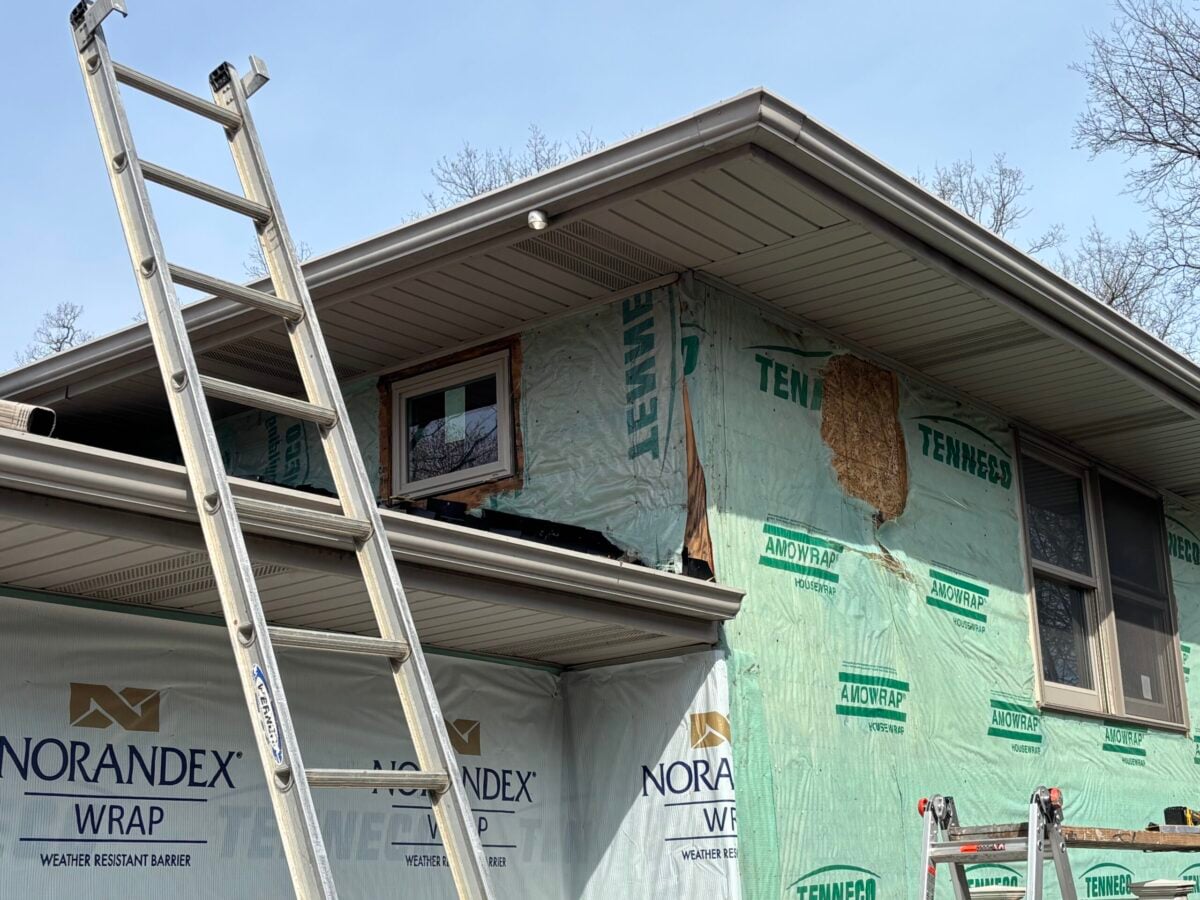
The first step is removing the existing siding material and evaluating the condition of the home’s exterior walls. This allows installers to identify any hidden damage that may need to be addressed before the new siding is installed.
Older siding can sometimes conceal moisture damage, wood rot, or structural issues. Correcting these problems before installation helps ensure the new siding performs properly for years to come.
- Existing siding is removed
- Exterior walls are exposed for inspection
- Damaged materials can be identified
- Repairs are completed as needed
2. Inspecting the Wall Structure
Once the old siding has been removed, the wall sheathing and structural components are carefully evaluated. This step helps verify that the home has a solid foundation for the new siding system.
Any damaged sheathing, framing, or moisture-related issues should be addressed before installation continues. Skipping this step can create future problems beneath the new siding.
- Wall sheathing is inspected
- Moisture damage is identified
- Structural concerns are addressed
- Repairs are completed before installation
3. Installing Weather Resistant Barriers
A weather resistant barrier is installed over the wall sheathing to help protect the home from moisture infiltration. This layer serves as an additional defense against wind driven rain and water intrusion.
Proper moisture management is one of the most important parts of any siding installation. The barrier helps direct water away from the structure while allowing trapped moisture to escape.
- Moisture protection is added
- Water intrusion risks are reduced
- Wall assemblies perform more efficiently
- Long term durability is improved
4. Installing Trim and Flashing
Before the siding panels are installed, trim pieces and flashing are placed around windows, doors, corners, and other transitions. These components help direct water away from vulnerable areas and create a finished appearance.
Proper flashing installation is critical because many siding leaks originate around openings rather than through the siding itself.
- Window and door flashing is installed
- Corner trim is added
- Water management details are completed
- Transition points are protected
5. Installing the Fiber Cement Siding

The fiber cement siding is then carefully installed according to manufacturer specifications. Proper spacing, fastening, and alignment are essential for long term performance.
Installers must account for expansion and contraction while maintaining a consistent appearance across the entire home. Attention to detail during this phase helps maximize durability and curb appeal.
- Siding panels are installed securely
- Manufacturer guidelines are followed
- Proper fasteners are used
- Consistent alignment is maintained
6. Finishing and Final Inspection
After installation is complete, the siding system is inspected to ensure all components have been installed correctly. Final adjustments are made as needed, and the project is reviewed for quality and appearance.
A thorough final inspection helps ensure the siding system performs as intended and provides the expected level of protection.
- Installation quality is reviewed
- Trim and flashing are inspected
- Final adjustments are completed
- Overall appearance is evaluated
Benefits of Fiber Cement Siding
Fiber cement siding offers several advantages that make it attractive to homeowners looking for a long term exterior solution. Its durability and versatility are among the biggest reasons for its growing popularity.
Compared to many traditional siding materials, fiber cement performs exceptionally well in challenging weather conditions and requires relatively little maintenance.
- Excellent durability
- Resistant to pests and insects
- Fire resistant material
- Strong weather resistance
- Long lifespan potential
- Available in numerous styles and colors
These benefits make fiber cement a popular choice for homeowners seeking both performance and aesthetics.
Potential Drawbacks to Consider
While fiber cement siding offers many advantages, homeowners should also understand the potential drawbacks before making a decision. Every siding material has strengths and weaknesses depending on the home’s needs and budget.
Understanding both sides of the equation helps homeowners make a more informed investment.
- Higher upfront cost than some siding options
- Heavier material requires professional installation
- Installation can take longer than vinyl siding
- May require repainting over time
Despite these considerations, many homeowners view the long term durability as a worthwhile investment.
Fiber Cement vs Other Siding Materials
When comparing siding options, homeowners often evaluate fiber cement alongside vinyl, wood, and metal siding. Each material offers different benefits depending on budget, appearance preferences, and maintenance expectations.
- Fiber Cement: Durable, attractive, and weather resistant
- Vinyl Siding: Affordable and low maintenance
- Wood Siding: Traditional appearance but higher maintenance
- Metal Siding: Durable and resistant to many weather conditions
The best choice depends on the homeowner’s goals and priorities.
How Long Does Fiber Cement Siding Last?
One of the biggest reasons homeowners choose fiber cement siding is its longevity. When properly installed and maintained, fiber cement siding can last for several decades.
Its resistance to rot, insects, and weather-related deterioration allows it to outperform many traditional siding materials in terms of lifespan.
- Often lasts 30 years or more
- Resistant to many common siding problems
- Handles weather exposure well
- Provides long term value
Proper installation plays a major role in maximizing lifespan.
Example: Why Proper Installation Matters

Imagine two neighboring homes install fiber cement siding at the same time. One installation follows manufacturer guidelines carefully, including proper flashing, moisture barriers, and fastening methods. The other skips several important installation details to reduce upfront costs.
After several years, the properly installed siding continues performing well, while the improperly installed system develops moisture issues around windows and trim. This example highlights how installation quality directly affects long term performance.
Why Northwest Indiana Homeowners Trust Discount Roof
At Discount Roof, we help homeowners improve their homes with durable exterior solutions designed for Indiana weather conditions. Homeowners throughout Northwest Indiana and surrounding areas trust us because we focus on honest recommendations, quality workmanship, and long term results.
We provide:
- Fiber cement siding installation
- Siding replacement services
- Roofing repair and replacement
- Gutter installation and replacement
- Free estimates and clear communication
Our goal is to help homeowners invest in exterior improvements that provide lasting value and protection.
Upgrade Your Home With Durable Fiber Cement Siding
Fiber cement siding installation offers homeowners an attractive and durable way to improve their home’s appearance and weather resistance. With proper installation and maintenance, fiber cement siding can provide decades of reliable performance while enhancing curb appeal and property value.
If you’re considering fiber cement siding for your home, contact Discount Roof today for a free estimate in Northwest Indiana and surrounding areas. Our team can explain your options, discuss available styles, and help you determine whether fiber cement siding is the right choice for your property.
Get Your Free Estimate Today